
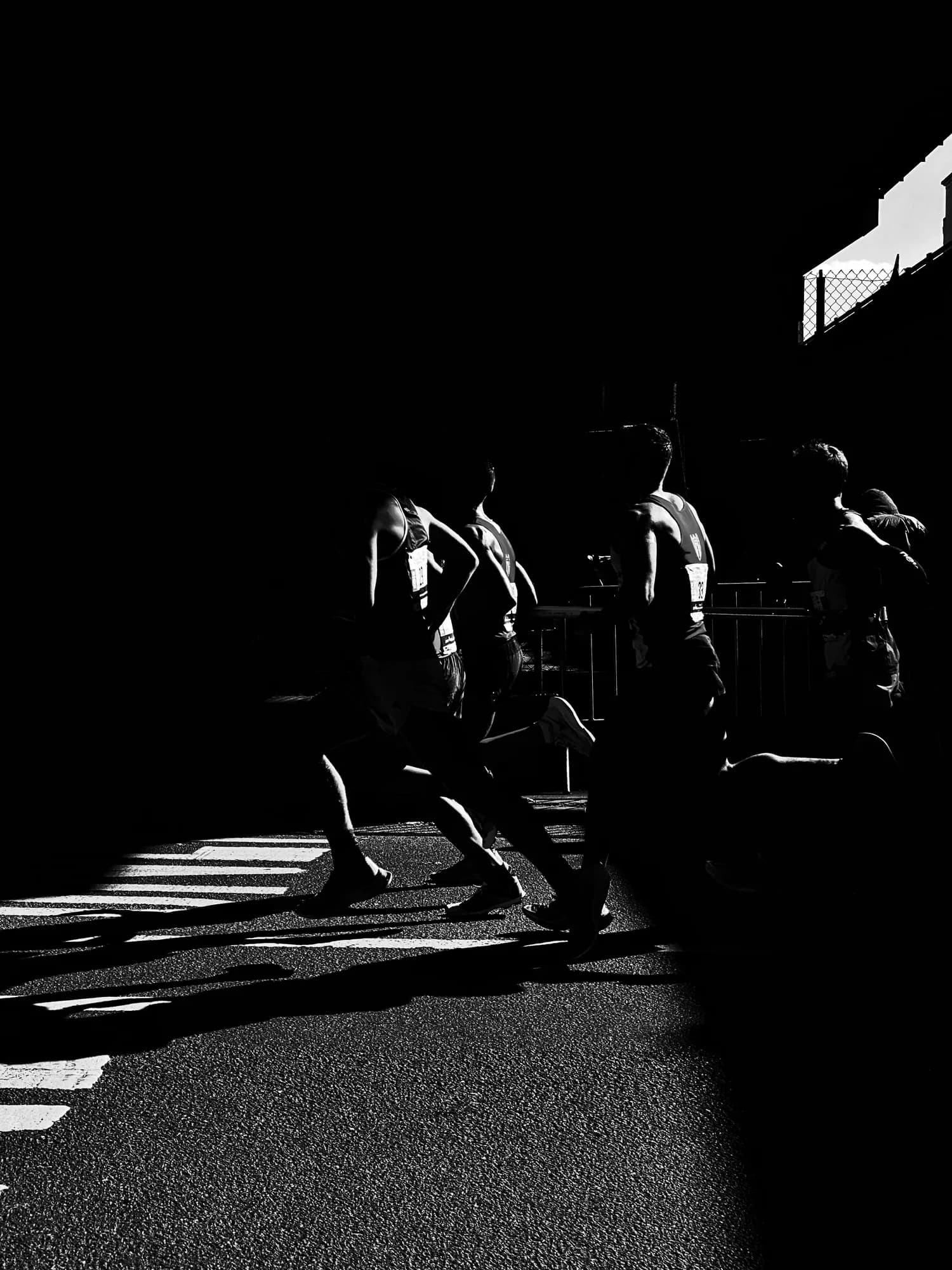
Stretching for
Runners
Complete routine to prevent injuries, improve mobility and speed up recovery.
When to stretch.
Before workout
Use dynamic stretching (not static). Movements that simulate running and increase muscle temperature. Avoid holding positions for more than 15 seconds before intense workouts.
After workout
Ideal for static stretching. With warm and fatigued muscles, you gain real mobility. Hold each position for 30-60 seconds.
Rest days
Light yoga sessions, foam roller and mobility on rest days enhance recovery and prevent muscle stiffness.
Main muscles to work.
Calf and Achilles Tendon
Area of greatest tension in runners. Gastrocnemius and soleus stretching essential to prevent tendinitis and plantar fasciitis.
Hamstrings
Tight hamstrings are a common cause of lower back pain and injuries. Stretch carefully and progressively.
Quadriceps and Psoas
Tight hip flexors affect running posture and cause knee overload. Lunge with twist is excellent for this area.
Glutes and Piriformis
Tight piriformis compresses the sciatic nerve (cause of piriformis syndrome). Pigeon pose is effective.
Iliotibial Band (IT)
The famous IT band, cause of runner's knee. Lateral foam roller + specific stretching to prevent inflammation.
10-minute routine post-run.
- 1Calf against wall — 60s each side
- 2Achilles (bent knee) — 45s each
- 3Hamstring lying with band — 60s each
- 4Psoas / hip flexor (low lunge) — 45s each
- 5Standing quad stretch — 30s each
- 6Piriformis (simplified pigeon) — 60s each
- 7IT band standing — 30s each side
Planos que incluem dias de recuperação e mobilidade
Programação completa com descanso ativo e flexibilidade integrados.
What science says about stretching.
Stretching recommendations for athletes have changed radically over recent decades. Studies from the 2000s showed that static stretching before exercise can reduce force production by 5-8% for the following hours — hence the shift to dynamic warm-ups before intense workouts.
Post-exercise is another story. With the muscle warm and in a fatigued state, connective tissue is more receptive to gains in length. It's the ideal moment for real flexibility gains — not just for 'cooling down'.
For runners specifically, the focus should be functional mobility — not extreme flexibility. Your hamstrings and hips need enough mobility for an efficient stride, not ballet-level range of motion.
What every runner gets wrong about stretching.
The more flexible, the better
False for runners. Hypermobility in the knee and ankle joints can increase injury risk. The goal is functional mobility for running's range of motion — not the splits.
Stretching heals injuries
A dangerous myth. Tendinitis and fasciitis in the acute phase get worse with forced stretching. In those conditions, gentle myofascial release and progressive strengthening are the better approach.
Pain while stretching is normal and healthy
Mild discomfort is normal. Sharp pain never is. 'No pain, no gain' doesn't apply to stretching — pushing past your limit causes micro-tears in the connective tissue that slow your progress.
Frequently asked questions.
Most popular plans. Start today.
Personalized training. Built for your goal.
Join 8,036 runners
No commitment. Cancel anytime.
Simple. No surprises.
One price. Full access. Cancel anytime.
Monthly
- Access to every running plan
- Magic pace calculator
- Guided workouts on smartwatch
- Garmin, Polar & Strava
- Performance analysis
- No ads
Annual
Save 33% — $6.67/mo
- Everything in monthly, plus:
- 2 months discount included
- Priority support
- Early access to new features
Join thousands of runners.
Train with the legends’ methods and watch your pace drop.
$9.99/mo · No commitment · Cancel anytime